

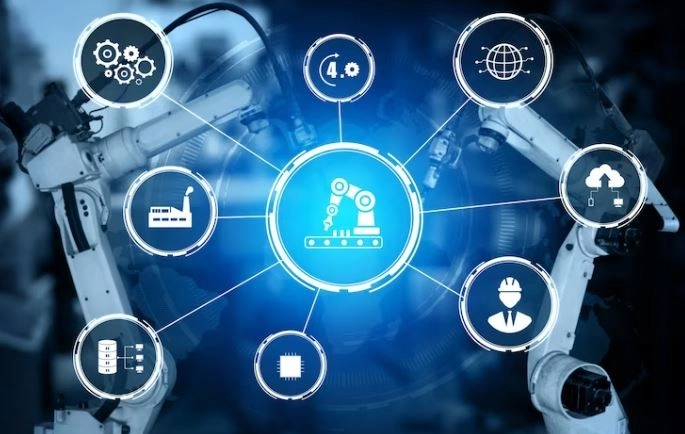
Industrial Automation | What is Industrial Automation?
In today’s fast-paced global market, efficiency isn't just a competitive advantage—it’s a survival mechanism. As industries face rising labor costs, fluctuating supply chain demands, and the continuous push for higher quality, a massive shift is occurring on the factory floor.
Enter Industrial Automation.
Once a luxury reserved for automotive giants, automation has evolved into a vital pillar for businesses across all sectors—from food processing and pharmaceuticals to textiles and heavy engineering. But what exactly does it entail, and why should your business care? Let's dive in.
What is Industrial Automation?
At its core, industrial automation involves using advanced control systems—such as Programmable Logic Controllers (PLCs), Supervisory Control and Data Acquisition (SCADA) systems, robotics, and the Industrial Internet of Things (IIoT)—to operate equipment and processes with minimal human intervention.
Instead of relying entirely on manual labor for repetitive, grueling, or highly precise tasks, intelligent machines take over. This allows human workers to pivot toward high-level strategy, oversight, and problem-solving.
The Big Benefits: Why Make the Shift?
If you are on the fence about upgrading your facility, the tangible returns on investment (ROI) speak for themselves:
24/7 Productivity: Machines don’t need sleep, shift changes, or breaks. Automation unlocks round-the-clock manufacturing capacity.
Impeccable Quality Control: Human error is natural, but robots excel at repetition. Automated systems ensure every single product meets exact specifications, reducing waste and customer rejects.
Enhanced Workplace Safety: By deploying robots to handle dangerous environments, heavy lifting, or toxic materials, you protect your most valuable asset—your workforce.
Data-Driven Decisions: With centralized monitoring, you gather deep insights into energy consumption, bottlenecks, and cycle times, allowing you to constantly optimize your operations.
Step Into the Future
Transitioning to an automated framework doesn’t happen overnight, and it doesn't require scrapping your entire facility. Successful integration starts with a thorough site survey, mapping out your current process bottlenecks, and introducing scalable solutions—like custom control panels or targeted robotic arms—that grow alongside your business.
The factory of tomorrow isn't a distant dream; it's being built right now. Embracing industrial automation is how modern businesses ensure they stay smarter, safer, and significantly more efficient.